

Melbourne (online)Somatic Therapy for anxiety.
Somatic Therapy is for you if…
You feel anxious often or experience anxiety regularly.
You feel overwhelmed, dysregulated or always on edge.
Your bodily responses feel out of control.
You have a hard time regulating and calming yourself.
You are rarely able to fully relax.
You are always anticipating danger or worst case scenarios.
You tend to overthink or overanalyse; past, present and future.
You do not feel safe or “home” in your body.
You have a hard time trusting people, yourself or the environment.
You feel a lot but somehow struggle to allow your emotions to be felt.
Your anxiety is accompanied by chronic pain, fatigue, gut issues, or other mindbody (psychophysiological) symptoms.
You never properly processed your childhood, past, or traumatic life events.
You avoid certain people, memories and emotions.
You feel guarded, unable to be open and vulnerable.
You don’t experience joy or fulfilment in your life, even though things are going “well”.
What is anxiety?
The American Psychological Association (APA) defines anxiety as: “An emotion characterised by apprehension and somatic (bodily / physiological) symptoms of tension in which an individual anticipates impending danger, catastrophe, or misfortune. The body often mobilises itself to meet the perceived threat: Muscles become tense, breathing is faster, and the heart beats more rapidly.
Commonly, our clients describe tightness in the chest and stomach, a heavy and racing heart beat, shallow breathing, tension in the arms and legs, hyper-vigilance, and bodily shaking. This is often accompanied by the mental activity of worry (thinking about dangers or problematic things that might occur), or, a fear response to the sensations of anxiety itself (Arghh! I hate this feeling, I just want it to go away. It’s so uncomfortable).
The APA continues: “Anxiety may be distinguished from fear both conceptually and physiologically, although the two terms are often used interchangeably. Anxiety is considered a future-oriented, long-acting response broadly focused on a diffuse threat, whereas fear is an appropriate, present-oriented, and short-lived response to a clearly identifiable and specific threat.”
Put simply, however, anxiety is what you experience when your brain anticipates danger. This can occur for many reasons, especially in the modern world.
Modern anxiety triggers are typically social, financial, cognitive or existential rather than physical. This is because, for so many of us, we are physically safe almost all of the time. Yet at the same time, we are flooded with more information (a lot of it is misleading or otherwise problematic, or entirely beyond our ability to influence) than we’ve ever had to process, and our lives are full of all kinds of stressors that are very different to our ancestors.
Although anxiety can come and go in response to specific triggers, it can become habituated. This is where the brain has created strong pathways for this anticipatory danger signalling. When this happens, people often end up experiencing what is commonly called chronic anxiety. When this happens, the autonomic nervous system can become out of whack. There is too much sympathetic (fight or flight) activity, and too little parasympathetic (rest and digest) activity. This can make life incredibly uncomfortable, and lead to people retreating from so many aspects of their world.
How can Somatic Therapy help?
Over time, Somatic Therapy can help you create new neural pathways through building emotional capacity, identifying worry and fear thoughts without becoming attached to or identified with them, learning self-regulation techniques, and establishing both self-awareness and a sense of bodily safety in the present.
To do this, ioēs uses top-down and bottom-up techniques like interoceptive body awareness, breathing exercises, somatic touch and movement, compassionate inquiry, “safety signal learning” and “extinction learning”.
Engaging in these processes strengthens your mindbody connection, supports stronger parasympathetic activation, and ultimately has the potential to reshape how your nervous system interprets and responds to internal and external stimuli. This can result in you feeling safer, freer, and more capable of meeting the challenges of your world.
Somatic Therapy, Melbourne.
We work with clients all around the world through thoughtfully designed online sessions, typically from the safety and comfort of your own home. At the moment, a significant portion of our client base resides in Melbourne, our former home.
Our practice is now located in the Currumbin Valley Eco Village on the Gold Coast.
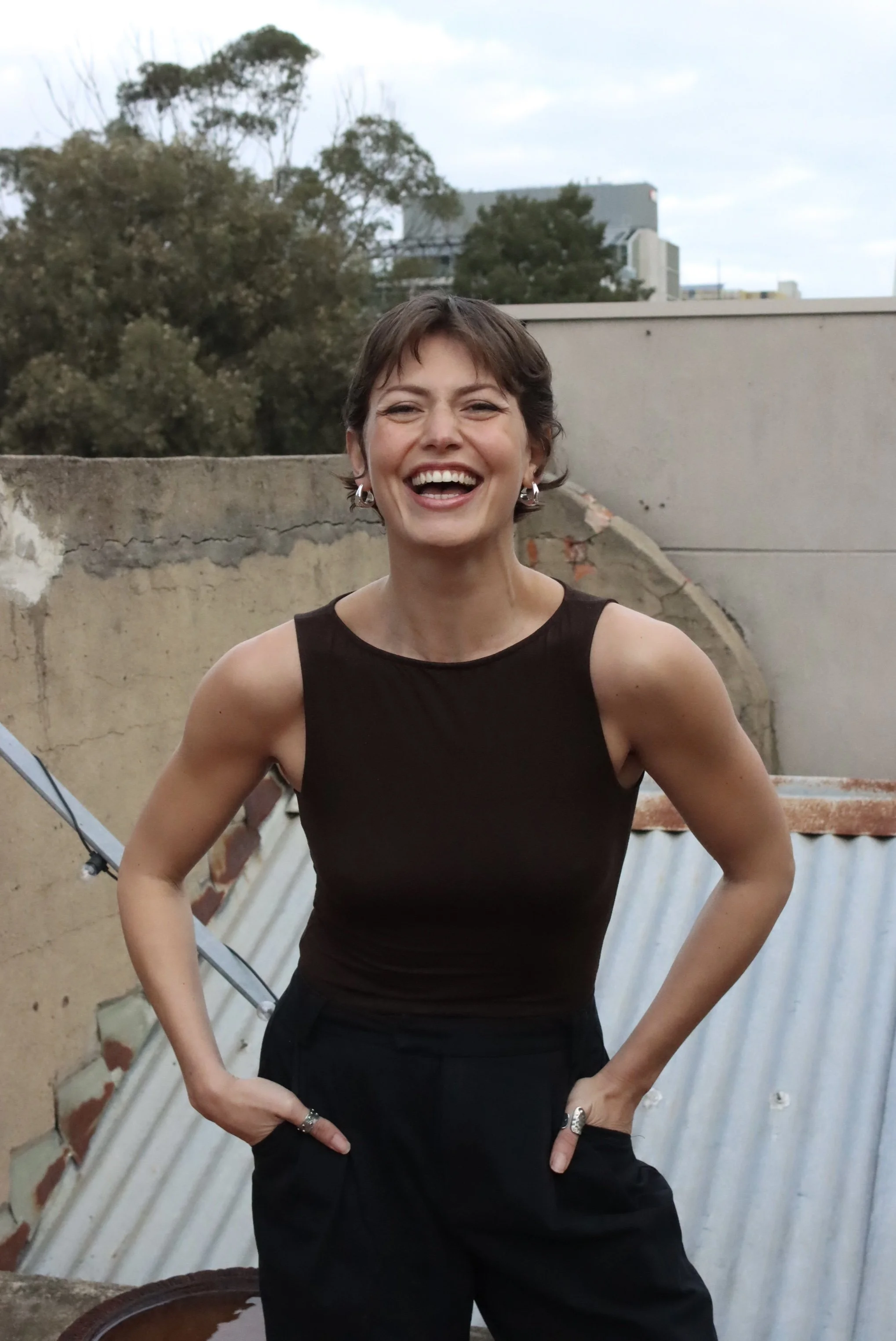
About Esther
Esther has dedicated nearly two decades to the question; what does it really mean to healthily and authentically express oneself? Through her background in dance, beauty, and para-medical science, consistent themes emerged in her client work and personal life; difficulty expressing and processing emotions, chronic stress, and disconnection from body and self.
With a passion for movement, human physiology, mindbody system dynamics, and the complex processes of nervous system adaptation, Esther helps clients attend to their emotional wounds and unmet needs in ways that not only reshape their nervous systems but helps clients gain more awareness, emotional capacity, agency, resilience and freedom for authentic self-expression. This is a context in which all of you is welcome and all of you becomes possible.
Esther is professionally trained and qualified in Somatic Therapy and Embodied Processing (TCFH), Craniosacral Therapy, Reiki, and is currently studying movement therapy.
Her Method
Embodied processing is an evidence-based approach to somatic therapy and nervous system regulation drawing from diverse modalities including Somatic Experiencing (SE), the NeuroAffective Relational Model (NARM), NeuroAffective Touch (NATouch), Internal Family Systems (IFS), The Diamond Approach (open ended inquiry) and Compassionate Inquiry (CI). In an EP session you will experience relational safety, attune to bodily signals, cultivate greater awareness of your unique survival physiology, progressively express unprocessed emotions, navigate the roots of trauma, underlying beliefs and fears, and integrate past experiences into a more resilient and well regulated mindbody system.
BIODYNAMIC CRANIOSACRAL THERAPY
We offer craniosacral therapy as an integration practice after a somatic therapy session (in-person only).
Biodynamic craniosacral therapy is a light touch, non-invasive and relaxing mindbody practice that focuses on deep listening, presence and the body’s natural ability to heal when held in a safe and supported environment.
This sense of safety allows the body to regulate and stay in the parasympathetic “rest and repair” state after therapy, which gives the body time and opportunity to integrate what’s been experienced, expressed and processed.
While somatic therapy as a practice alone is often enough and effective, the busyness of our lives and old nervous system patterns can often pull us back too quickly, disabling us from fully integrating the profound experiences and realisations that often arise within a session.
Craniosacral therapy offers a relational space where you can fully relax, trust and experience your mindbody’s innate power to learn, integrate, adapt and transform.